My first dispatch from the 2025 Sundance Film Festival includes capsule reviews of Josh Osit’s Predators, Albert Birney’s OBEX and Alireza Khatami’s The Things You Kill.
PREDATORS
dir. David Osit, U.S. Documentary Competition, 96 minutes.
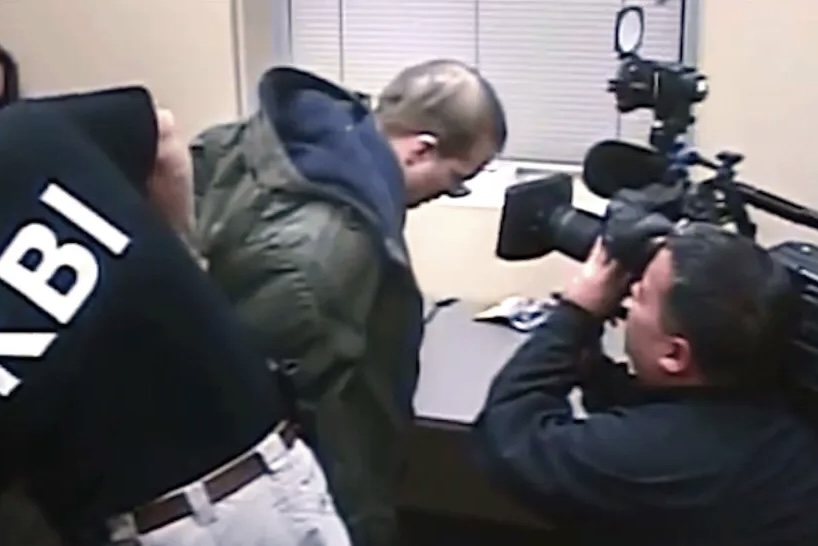
Since most online discourse these days seems to be people calling each other pedophiles and screaming about sex trafficking, it’s hard not to wonder how much of this started with To Catch A Predator. The wildly popular Dateline NBC spinoff enlisted young-looking actors of legal age to lure wannabe pederasts to a secretly recorded rendezvous where they were ambushed by host Chris Hansen, who was usually able to elicit an un-Mirandized confession for the cameras before police pounced on the perverts. The show only lasted three years – coming to an ignominious end after a target blew his brains out during a taping – yet still thrives in the afterlife of reruns, knockoffs and YouTuber vigilante copycats. Filmmaker David Osit is a survivor of child sexual abuse who grew up obsessed with the program, finding it both cathartic and re-traumatizing. His Predators is an uncommonly thoughtful documentary probing our attraction/repulsion to such sordid stories, and the shared humanity that is lost when the ugliest aspects of society are packaged as entertainment. Strange to say about a film full of child molesters, but Hansen comes off as the most unsympathetic person in the picture — a craven opportunist playing policeman to conventions full of groupies, showing no remorse for say, ruining the life of an 18-year-old high school student who thought he was seducing a 15-year-old freshman. There’s something massively satisfying about the climax of Predators, when Osit turns the camera on the host and asks him to take a seat.
OBEX
dir. Albert Birney, NEXT, 90 minutes.
Another analog wonder from Albert Birney, whose richly idiosyncratic Sylvio and Strawberry Mansion were minor-key miracles of lo-fi whimsy. Flying solo this time without usual collaborator Kentucker Audley, Birney stars as a buttoned-up, agoraphobic computer dork circa 1987, a happy hermit surrounded by stacks of tube TVs and VHS tapes, singing late night karaoke covers of Gary Numan’s “Cars” to his puppy. When he tries out a new Legend of Zelda-ish Mac game, our hapless hero finds himself transported into a medieval, 8-bit netherworld that’s like Eraserhead by way of Tron. Shot in beautiful, grainy black-and-white by co-writer and cinematographer Pete Ohs, every frame of the film is an intricately designed artisanal delight, buoyed by Birney’s innocently droll, deadpan humor. In the story department, this is pretty flimsy stuff — a quest adventure to find a missing dog, with some generational trauma thrown in seemingly because it’s fashionable these days. But that almost doesn’t matter when the simple act of looking at a film is this delightful. I adore how lovingly handcrafted Birney’s images and effects are, a retro sci-fi aesthetic by way of thrift stores and hot glue guns that feels like a pointed rebuke to AI slop.
THE THINGS YOU KILL
dir. Alireza Khatami, World Cinema Dramatic Competition, 114 minutes.
There’s a superb confidence to writer-director Alireza Khatami’s slow-burn psychological thriller. When Ali (Ekin Koç), a flustered college professor and failing farmer reeling from the death of his sickly mother, starts fixating on his abusive father’s possible involvement, a cool, composed drifter named Reza (Erkan Kolçak Köstendil) shows up looking for a job. The fast friends are two sides of a coin – credit my eagle-eyed pal Bilge Ebiri for noticing that each has half of the filmmaker’s first name – and we soon slip into Dostoyevsky territory with a few Bunuelian casting tricks and a lot of Hitchcockian tension. The film is full of linguistic games and sly, writerly metaphors: Ali’s marriage is strained after failed attempts to conceive a child, while the irrigation system at his tree farm is backed up, reducing water to a trickle. In other hands this all could have been screamingly obvious and/or insufferable. (The inevitable American remake is going to be awful.) But Khatami cultivates an uneasy ambiguity throughout, building to a shattering final sequence that cuts us off at the knees. As the story unfolds, you can see at least half a dozen ways in which the film could have gone terribly wrong. Watching Khatami sidestep them all is exhilarating.
 SPLICED PERSONALITY